Roof rats, also known as citrus or black rats, exploit Tampa's mature tree canopy to access elevated rooflines and nest in climate-controlled attic insulation. In historic neighborhoods like Seminole Heights, Hyde…
Roof rats, also known as citrus or black rats, exploit Tampa's mature tree canopy to access elevated rooflines and nest in climate-controlled attic insulation. In historic neighborhoods like Seminole Heights, Hyde Park, and Tampa Heights, overhanging oak limbs and aging fascia boards provide direct pathways into attic spaces. These rodents chew through thermal insulation, gnaw electrical wiring, introducing an unmonitored attic fire hazard, and deposit unsanitary droppings along drywall ceiling planes. In newer slab homes throughout New Tampa and Westchase, unsealed barrel tile roof transitions and builder gaps around AC chase lines create equally vulnerable corridors. Trapping alone does not solve the underlying issue; without structural exclusion, vacant territories are reoccupied by neighboring colonies within 3 to 6 weeks.
Decision guidance relies on identifying structural ingress versus perimeter activity. If noises occur strictly overhead at night and droppings are localized in attic insulation, dedicated roof rat exclusion and trapping is the required pathway rather than ground bait stations. Ground baiting poses secondary-poisoning exposure concerns for indoor pets, predatory birds near the Tampa Riverwalk, and native wildlife around Ballast Point and Davis Islands. Trapping inside the attic utilizes secure, unpoisoned snap stations checked across 3 to 4 scheduled cycles until zero catch activity is documented over a 72-hour window. The trade-off between exterior bait stations and attic trapping involves immediate mechanical capture versus continuous outdoor suppression: trapping captures living attic populations without chemical carcass decay inside interior walls, while structural exclusion permanently halts new exterior entry.
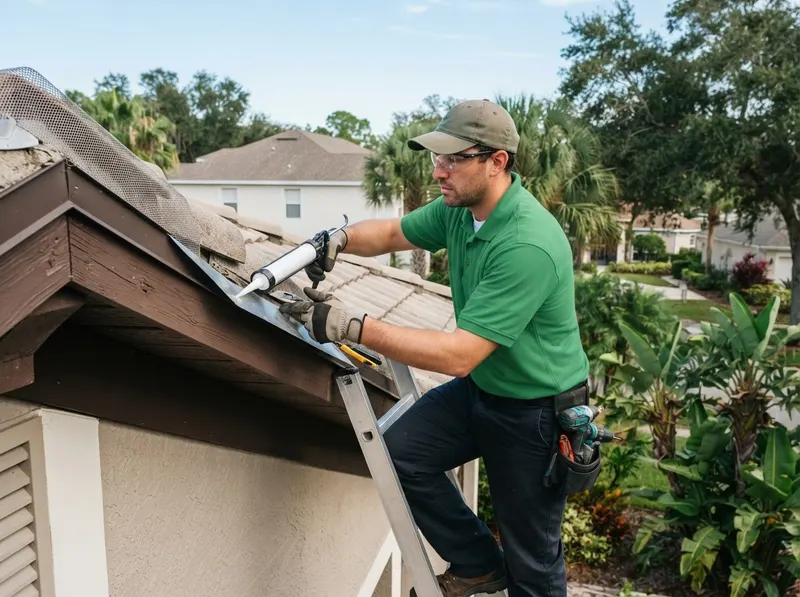
Exclusion sealing addresses all structural apertures greater than 0.5 inches across roof returns, ridge vents, soffit junctions, and plumbing stacks. In Palma Ceia, Ybor City, and Carrollwood, humid subtropical air degrades polyurethane foams, which rodents gnaw through in under 48 hours. Long-term structural defense requires 23-gauge galvanized wire hardware cloth mechanically anchored over soffits and custom metal flashing secured across construction gaps. The standard protocol follows three distinct execution phases: Phase 1 establishes an initial attic trap grid; Phase 2 executes physical entry-point exclusion on rooflines, gable vents, and pipe chases; Phase 3 completes trap monitoring, carcass retrieval, and attic sanitization before the job is closed out.
Every job gets a firm, written price after a free on-site visit.
Tell us about your roof rat exclusion and trapping job in Tampa and we'll send a clear, written quote, usually the same day.
 Tampa Oak Pest Control