Securing a professional pest control service in Tampa protects structural integrity and family wellness against aggressive subtropical wood-destroying insects and health-threatening vectors. Continuous relative humidity hovering near 74 percent throughout the Tampa Bay basin drives subterranean termites, American cockroaches, and invasive roof rats directly into attic spaces, wall voids, and crawlspaces.
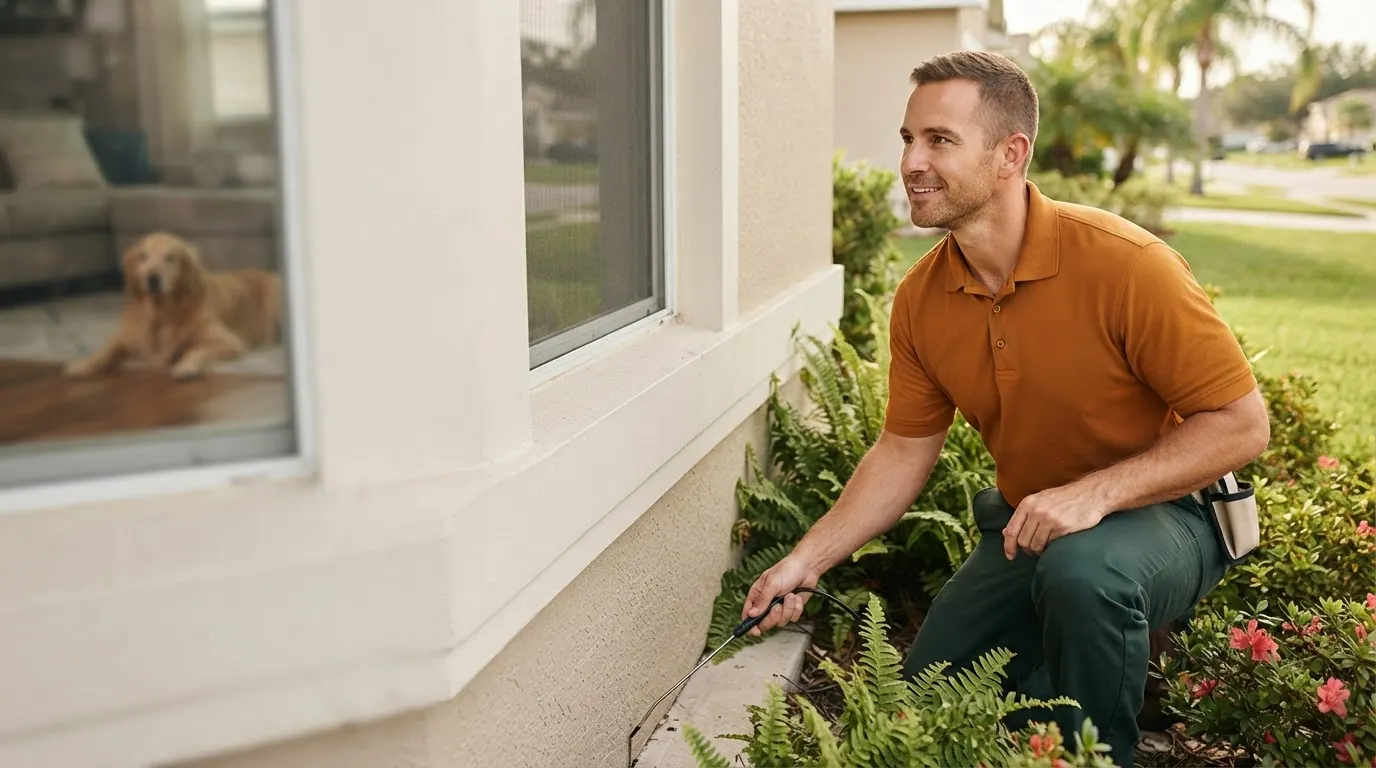
Pest Control Service company in Tampa is a specialized pest management provider delivering integrated exterior barrier defense, wood-destroying insect eradication, and interior sanitization treatments across Hillsborough County properties.
Every service reflects the same meticulous attention to detail, whether it's a single job or a larger pest control service project across Tampa.
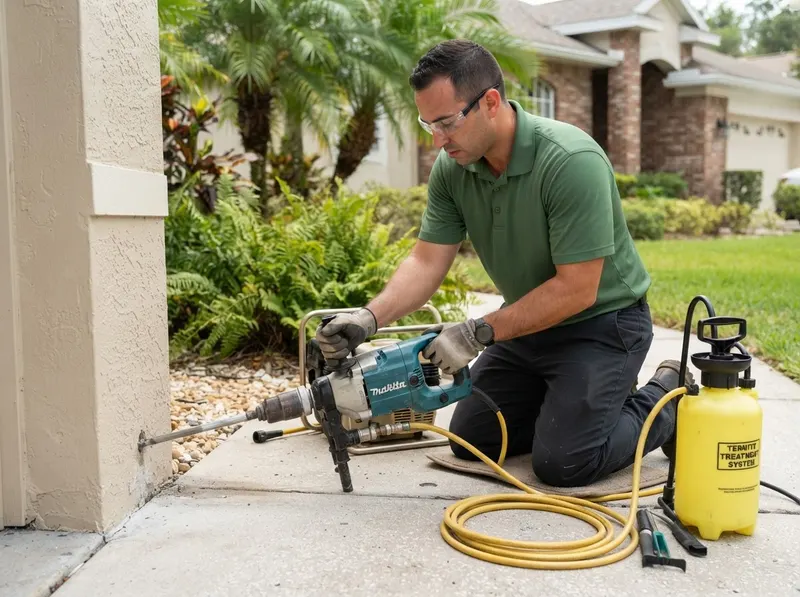
Subterranean termite treatment neutralizes destructive Reticulitermes flavipes and Coptotermes formosanus colonies through non-repellent liquid soil barriers and monitored chitin synthesis inhibitor baiting stations. Technicians dig 6-inch by 6-inch trenches along the exterior foundation perimeter, applying 4 gallons of finished termiticide solution per 10 linear feet into sandy soils. Concrete slab abutting walls are drilled vertically at 12-inch intervals using rotary hammer drills to establish a continuous sub-slab chemical barrier beneath patios and garages.
Get a quote →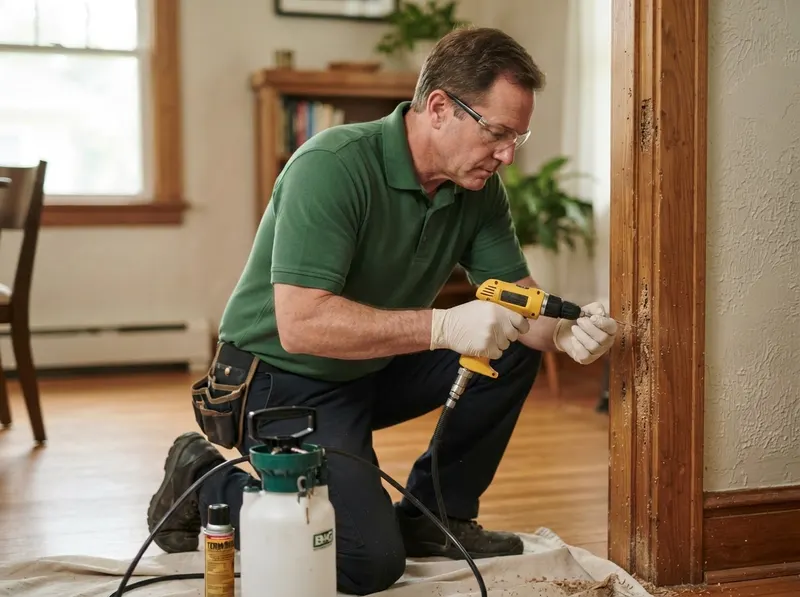
Drywood termite spot treatment eliminates localized Cryptotermes brevis colonies infesting structural wood members, door frames, and attic trusses without full-structure gas fumigation. Technicians identify active feeding pockets via acoustic detection and kick-out holes displaying fecal frass, followed by drilling 7/64-inch injection ports directly into the galleries. A localized injection of expanding chemical foam delivers localized active ingredients through the wood vascular system to achieve colony elimination in isolated timbers.
Get a quote →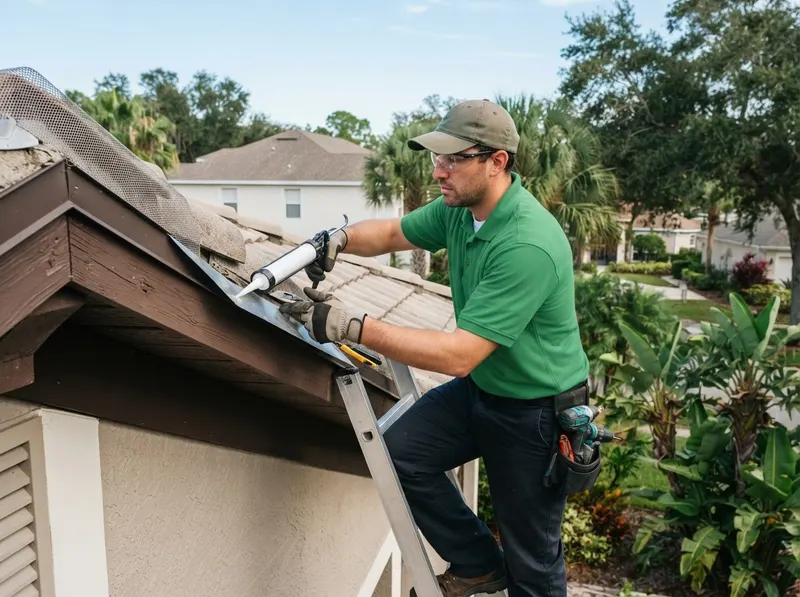
Roof rat exclusion targets invasive Rattus rattus populations navigating suburban tree canopies, power drops, and tile rooflines across older and waterfront neighborhoods. The service incorporates a full structural audit identifying gaps wider than 0.25 inches along soffits, roof returns, ridge caps, and plumbing stacks, sealing all ingress portals with galvanized steel mesh and concrete-bonding sealants. Heavy-duty wooden snap traps placed along observed attic runways deliver rapid physical capture without using indoor poisons.
Get a quote →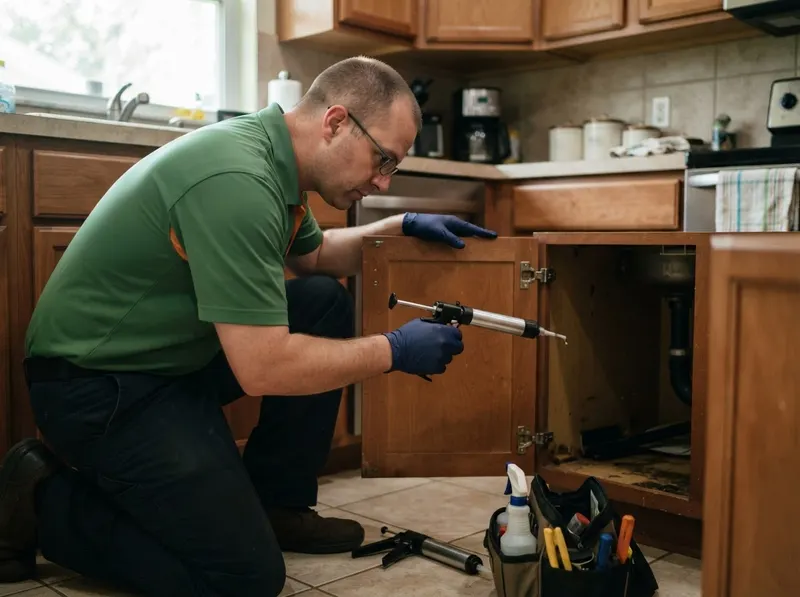
German cockroach cleanout addresses Blattella germanica infestations in kitchens, pantries, and moisture-rich plumbing zones using insect growth regulators and indoxacarb gel baits. Technicians inject targeted bait micro-dots into structural hinge recesses, electrical motor housings, and under-sink pipe chases while avoiding airborne sprays that cause colony budding. Insect growth regulators disrupt nymph molting cycles to break the reproductive cycle across nested egg cases within 21 days.
Get a quote →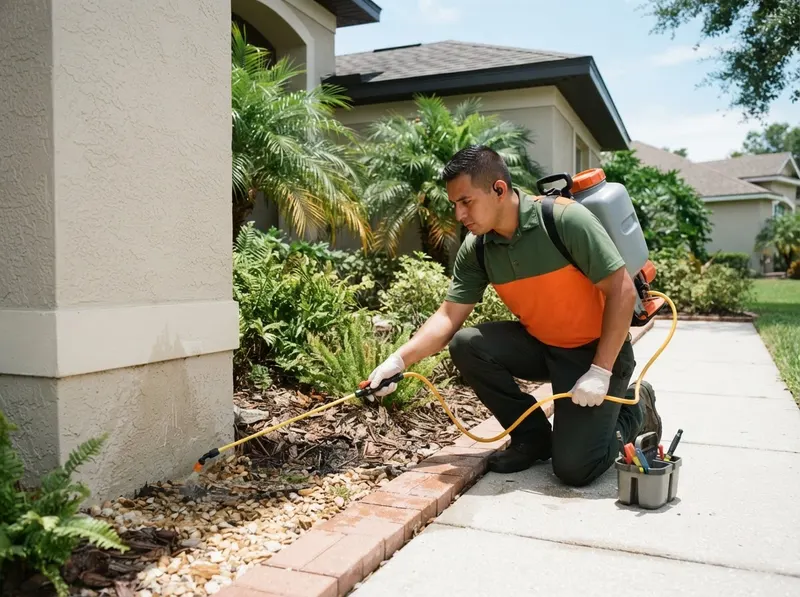
Perimeter pest barrier defense establishes an external repellent envelope preventing American cockroaches, ghost ants, and silverfish from crossing into residential living spaces. Technicians apply microencapsulated liquid formulations 3 feet up the exterior masonry and 6 feet out across adjacent mulch, gravel, and lawn perimeters. Granular insect bait applied to moisture-rich flower beds and foundation shrubs provides slow-release protection against foraging ant colonies during heavy rainy periods.
Get a quote →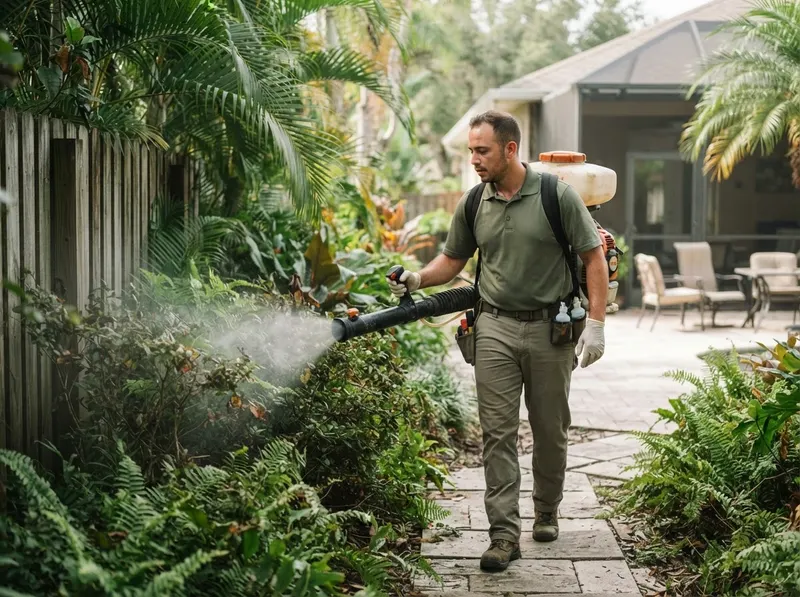
Mosquito reduction treatment suppresses Aedes aegypti and Culex populations breeding in shaded foliage and standing moisture pools surrounding residential properties. Utilizing gas-powered mist blowers, technicians apply microencapsulated adulticides paired with biological larvicides to the undersides of broadleaf plants, dense groundcover, and drainage swales. Biological larvicides containing Bacillus thuringiensis israelensis applied to standing water basins eliminate developing mosquito larvae before adult emergence.
Get a quote →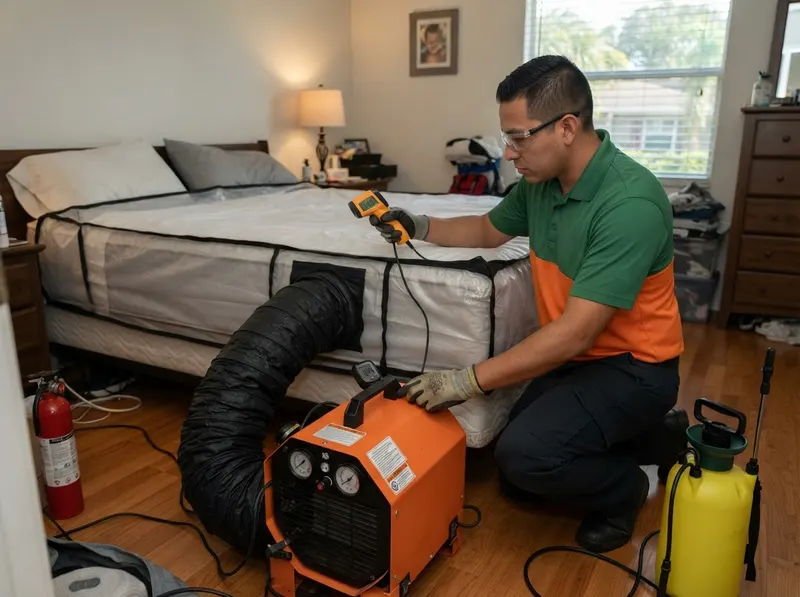
Bed bug remediation eradicates Cimex lectularius populations from mattresses, headboards, baseboards, and furniture assemblies through targeted dual-action protocols. Technicians deploy high-output industrial heaters to elevate ambient room temperatures above the lethal thermal threshold of 122 degrees Fahrenheit, sustaining it for a minimum of 4 hours to eradicate all life stages, including eggs. Targeted residual dust treatments in wall switch boxes and baseboard voids prevent re-infestation.
Get a quote →
Commercial kitchen pest management maintains regulatory health-code compliance for food-handling facilities, restaurants, and retail spaces across business districts. The service features sanitation reviews, floor drain biological foaming treatments to eliminate drain fly larvae, and the installation of non-chemical insect light traps in receiving bays. Tamper-evident interior rodent monitoring units and digital trend logs satisfy state inspection standards without interrupting food prep.
Get a quote →You get a firm, itemized quote for your pest control service before any work begins, no surprises, no pressure.
Careful prep, tidy work, and a full cleanup when we are done. We treat your home and belongings like our own.
The same trusted, background-checked team from the first call to the final check.
Selecting appropriate intervention protocols depends strictly on target biology, building architecture, and property age. For localized or sudden indoor pest occurrences such as German cockroach introductions or nuisance sugar ant trails, choose targeted non-repellent interior gel baiting combined with crack-and-crevice spot applications. Gel baiting uses insect feeding biology to distribute active ingredients through the colony nesting sites without dispersing broad-spectrum airborne chemicals throughout food-preparation zones.
The operational trade-off is treatment speed: bait matrices rely on consumption cascades and require 7 to 14 days to achieve colony mortality, compared to fast-acting knockdowns that do not eliminate hidden harborage queens. If dealing with structural infestations of Eastern subterranean termites or Formosan subterranean termites, property owners must choose between continuous exterior liquid termiticide soil trenches and in-ground bait monitoring stations. Soil termiticide trenching establishes an immediate uninterrupted chemical treated zone around monolithic concrete slabs common to modern Westchase or New Tampa developments, binding directly to sandy soils for five or more years.
The operational trade-off is landscape disruption, as technicians must dig 6-inch-wide trenches along the foundation perimeter and drill through adjoining patio slabs. Conversely, bait station systems present zero landscape disruption and consume low amounts of chemical bait via localized monitoring cylinders spaced every 10 to 15 linear feet, but they demand 30 to 90 days of termite feeding activity to achieve complete colony suppression. When dealing with historic wood-frame bungalows or raised pier-and-beam foundations in Seminole Heights, Tampa Heights, or Ybor City, subterranean termite trenching must be combined with specialized crawlspace wood treatments, whereas solid masonry block construction on Davis Islands primarily demands exterior weep-hole screening and expansion-joint sealing.
For roof rat activity across live oak canopies near Palma Ceia and Ballast Point, immediate physical exclusion using 18-gauge galvanized hardware cloth combined with enclosed attic snap-trap runs is required. The trade-off between mechanical rodent trapping and anticoagulant baiting is labor density: mechanical trapping demands repeated physical inspections within 48 to 72 hours to remove carcasses before Florida heat accelerates decomposition and odor, whereas exterior tamper-resistant bait stations manage perimeter rodent numbers continuously without placing toxic rodenticides inside residential ceilings.
Every project gets a firm, written price after a free on-site visit. Ranges below for orientation.
Tell us about your pest control service job and we'll send a clear, written quote, usually the same day. Or just call and talk to a real Tampa pro.
(239) 688-9770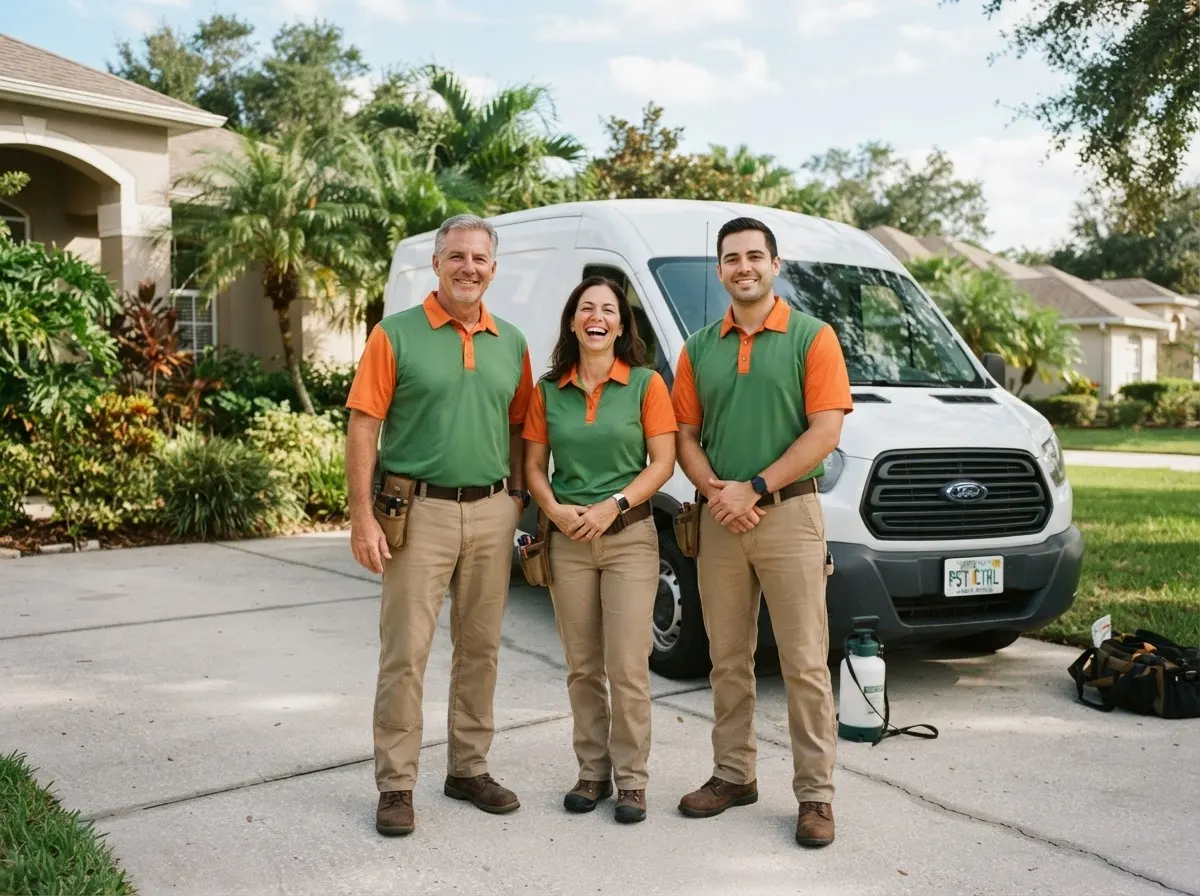
Properties bordering the Hillsborough River, Hillsborough Bay, and low-lying zones along Bayshore Boulevard face extreme subterranean moisture saturation that accelerates wood decay and forces subterranean termites upward into foundation framing. Historic homes in Seminole Heights and Ybor City built on heart pine piers lack modern continuous vapor barriers, leaving open crawlspaces vulnerable to dampwood termites and roof rat migrations from nearby mature oak canopies. Dense suburban developments near Westchase and Carrollwood frequently battle aggressive ghost ant colonies nesting in heavy Saint Augustine turf and commercial mulch beds, requiring precise bait formulations rather than generic perimeter sprays that trigger ant colony budding.
Free estimates for Tampa & the surrounding area.
 Tampa Oak Pest Control